
Welcome to Environmental Literacy Classroom
Brought to you by the Rockfish Valley Foundation

In Partnership With the Virginia DCR
Post 4 — Trees of Virginia
A forest is more than a backdrop
Fun Fact:
Virginia’s forests are layered communities, not just collections of trunks. Different trees feed different insects, shade streams in different ways, and offer shelter, seeds, flowers, or cavities to wildlife throughout the year.
Spot It:
Notice the differences around you: tall canopy trees, younger saplings below, shrubs at the edges, and vines climbing toward light. Bark texture, leaf shape, branching pattern, and where a tree grows can all help you tell one species from another.
Why It Matters Here:
Along the Rockfish Valley Trail, trees shape temperature, soil moisture, bird activity, and stream health. Learning to recognize even a few common species turns an ordinary walk into a richer reading of the landscape.
A Tale of Two Trees and the Animals They Help
Look to your left. You’ll see a tall and strong black cherry tree standing like a guard.

Now, look behind toward the flowing river. You will find a cluster of alder trees.
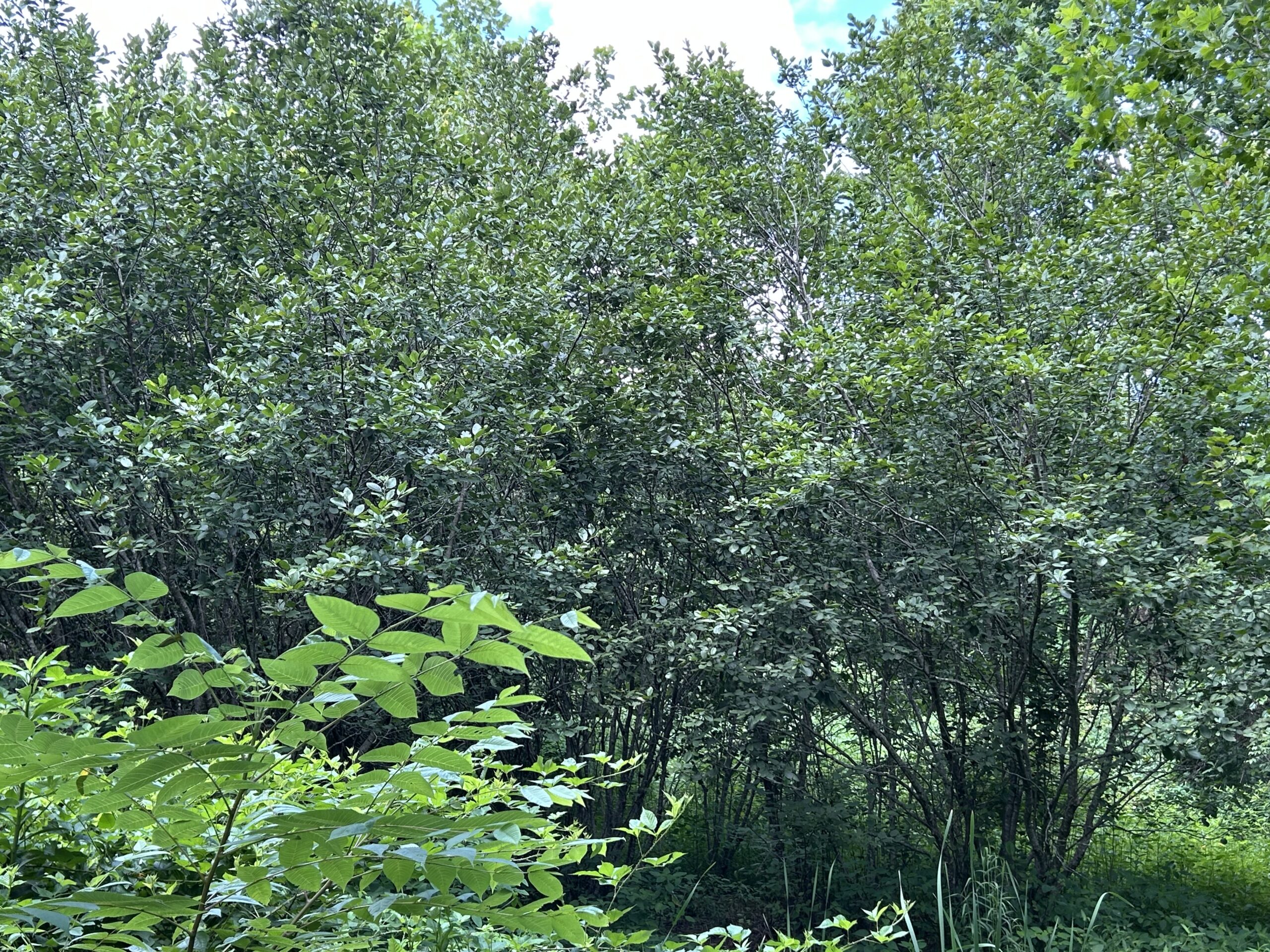
Each of these Virginia natives has a special connection with different kinds of animals, both on land and in the water. Their connections highlight the essential role trees play in sustaining nature’s ecosystems and keeping them in balance.
The Black Cherry—A Big Helper for Land Animals
The black cherry tree is a keystone species, meaning it’s a superstar in the ecosystem. It gives hundreds of different land animals what they need to survive-food, shelter, and safe places to build nests. Such gifts help make it possible for different kinds of animals to live in the area.
Gift of Food:
-In spring, its flowers’ sweet nectar and pollen attract bees, wasps, flies, and ants. These insects, in turn, become important meals for dragonflies, spiders, birds, and raccoons.
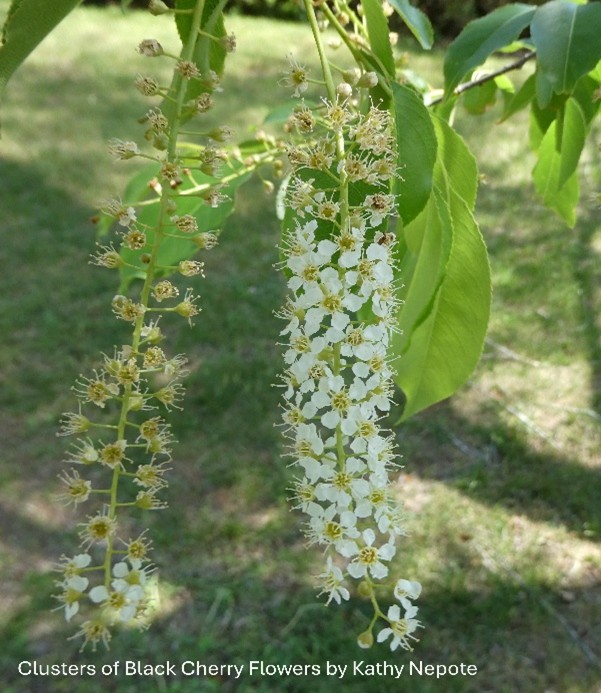
-More than 450 kinds of butterflies and moths lay their eggs on its flowers and leaves. These eggs hatch into caterpillars, which are full of protein and are a vital food for birds and their babies. Without these caterpillars, fewer chicks would survive.!!
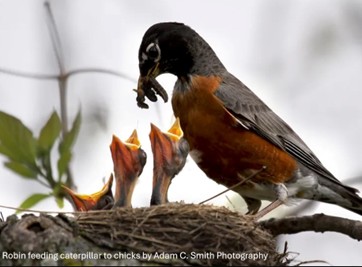
-In the summer, the black cherry is full of berries that are tasty and healthy for over 40 types of birds, including robins and other songbirds, and woodpeckers, grouse and wild turkeys.
-Many furry animals also feast on these berries, including mice, squirrels, rabbits, foxes, raccoons, deer, and even black bears.

-Deer and rabbits even eat the young branches and buds of the tree, especially when it gets cold. Unlike other animals, deer and rabbits are not sickened by the tree’s bark.
Gift of Shelter:
-Small creatures like caterpillars and butterflies can hide from bigger animals and bad weather in the cracks of the bark or under the leaves.
-Birds can hide from animals that hunt them and stay safe from storms in the thick leaves of the tree.
-Deer will rest in the shade under the tree.
Gift of Nesting Places:
-Some insects, like the black cherry fruit fly, lay their eggs inside the cherries. The eastern tent caterpillar builds its nest on the branches. Even though these nests might look messy, they give birds and other animals an early meal in the year.
-Many birds, including robins and wood thrush, build their nests in the black cherry branches.
-Woodpeckers carve out nesting holes in the tree trunks. As the tree ages and softens, natural decay also forms openings. Other cavity-nesting birds, such as mockingbirds and tufted titmice readily use both as secure nesting sites.

-Squirrels build their nests, called dreys, high in the tree branches or in existing tree cavities.
The Alder—A Protector of Water Animals
Like the black cherry tree, the alder tree helps some animals that live on land. But because it grows well in wet areas and along rivers, it’s especially important for animals that live in the water. It gives both groups of animals what they need to survive-food, shelter, shade and bank stability.
Gift of Food:
-When alder leaves and small branches fall into the water, they become a healthy meal for immature young water bugs like caddisflies, stoneflies, mayflies, and water beetles.
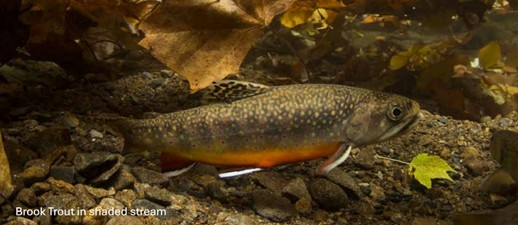
-These young bugs are a prized food for fish such as trout and bass. When they mature, they are also food for birds, amphibians and reptiles.
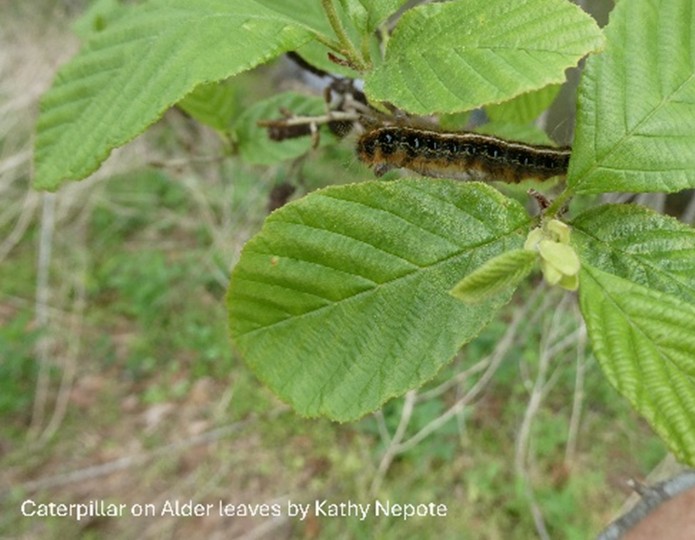
-The leaves feed the caterpillars of 156 kinds of butterflies and moths. These caterpillars are a vital food source for birds and their babies!
-The pollen from the male flowers, called catkins, provide protein for many insects.

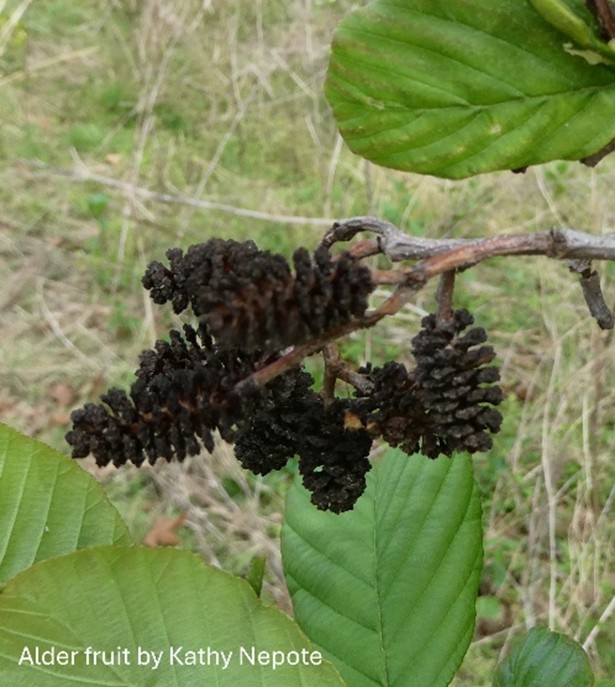
-The small, cone-like fruits of the alder are eaten by birds and small animals like mice.
Gift of Shelter:
-The many roots of the alder create safe spots and places where fish such as largemouth and smallmouth bass, sunfish and minnows can lay their eggs. These roots protect them from strong waterflow and from animals that might eat them.
-While several birds build nests in alder trees, American woodcocks and red-winged blackbirds show a particular preference for nesting in their branches.
-Clusters of alder trees form a dense natural canopy, offering essential shelter for a variety of water birds, including ducks, and for ground dwelling birds, turtles, and deer.
-Alder tree trunks and branches are among the beavers’ preferred choices for building their dams and lodges.
Gift of Shade:
-The shade provided by the alder’s leaves helps maintain cooler water temperatures. Cooler water contains higher oxygen levels, which are essential for fish like trout as well as some aquatic insects like mayflies and stoneflies.
Gift of Bank Stability:
-The strong roots of the alder tree help keep riverbanks stable and stop soil from washing away. This reduces the dirt and harmful substances in runoff that could pollute the water and harm the animals living there.
These two trees, the black cherry and the alder, clearly show us just how important different kinds of trees are for helping the wildlife around us, both on land and in the water.
Now that you’ve explored how two different trees offer vital gifts to wildlife, it’s time to step outside and enjoy identifying other trees using resources like the Charlottesville Area Tree Stewards – Tree Identification guide or other helpful online links. Then discover how each tree shares its unique gifts of food and shelter with the animals that rely on it.
Charlottesville Area Tree Stewards – Tree Identification Reference Guide
https://charlottesvilleareatreestewards.org/wp-content/uploads/2024/06/Tree-Wheel-Information-Sheet-website-2024.pdf
Print a copy to carry with you or get a free trifold brochure at RVF Natural History Museum
Common Native Trees of Virginia: Identification Guide
Virginia Department of Forestry
https://dof.virginia.gov/wp-content/uploads/Common-Native-Trees-ID-spreads_pub.pdf
Piedmont Native Plants: A Guide for Landscapes and Gardens (2nd ed.) www.plantvirginianatives.org/native-plants-for-northern-piedmont/
Darke, Rick, and Douglas Tallamy. The Living Landscape: Designing for Beauty and Biodiversity in the Home Garden. Timber Press, 2014.
This module made possible through the generous efforts of volunteers from the Charlottesville Area Tree Stewards.

The Rockfish Valley Foundation works to protect and educate on the land, air, waters, and living history of the Rockfish Valley. We are volunteer-led and donor-funded. For information on donating or volunteering please visit us at rockfishvalley.org